


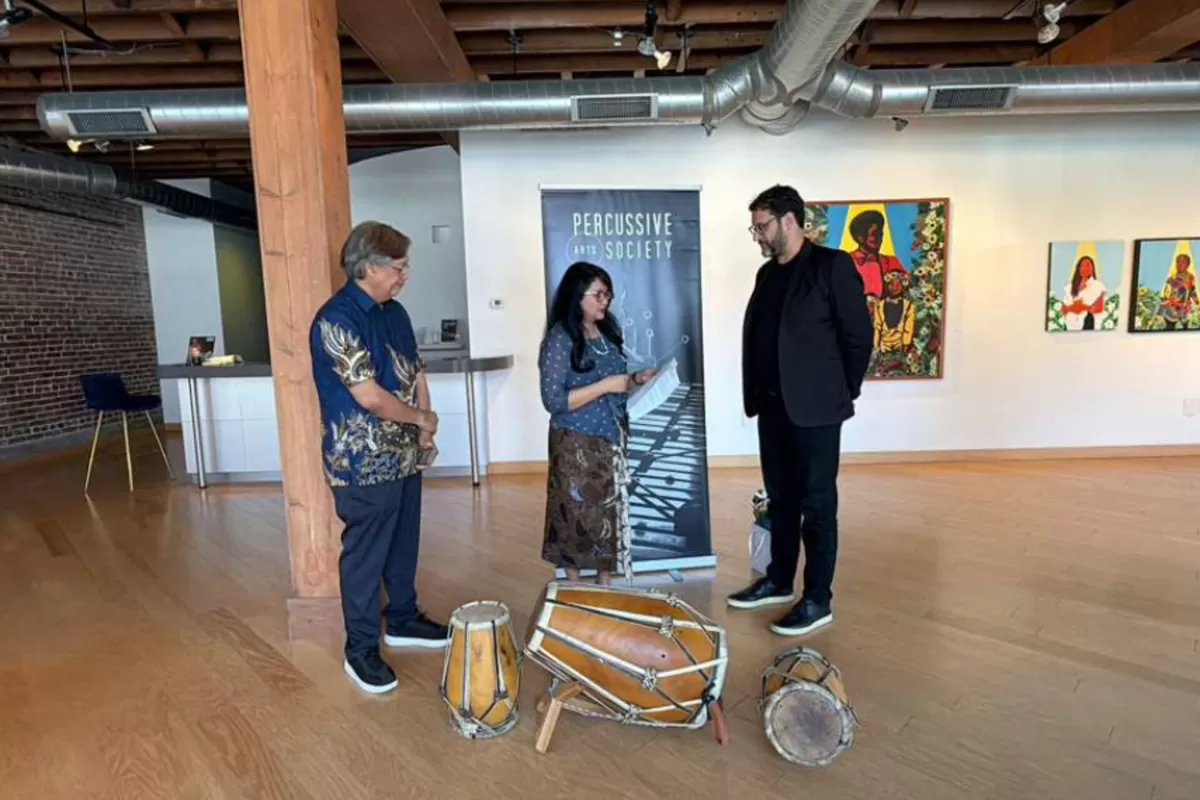
NEW YORK. For the first time, a traditional Sundanese percussion or Sundanese Kendang instrument originally from West Java Island in Indonesia, has become part of the collection of the Rhythm! Discovery Center (RDC) Museum in Indianapolis, Indiana. Last week, Indonesian percussionist and chairman of the Percussive Arts Society-Indonesia Chapter (PAS-IC), Djati Rekso Wibowo, formally presented the instrument to the RDC board.
"It all started at the PASIC 2021 percussion musician event, where I attended as a percussionist from Indonesia. I had the chance to visit a museum called Rhythm! Discovery Center (RDC), a museum that has a collection of thousands of percussion instruments from various music genres and ethnicities of the world. These musical instruments are not only on display, but can be played, studied, and become objects of musical research," said Djati Rekso Wibowo, who is well known by his stage name, Bowie Djati. "But I was surprised, there were no Indonesian musical instruments. So I offered to bring and showcase traditional percussion instruments from Indonesia. They liked the idea. Then, after a long process, finally the Sundanese Kendang percussion instrument arrived in Indiana, to be exhibited," explained Bowie during a coffee interview with NY Readers in New York City.
The Sundanese percussion instruments donated to the museum are a traditional mini set. They consist of three instruments: one large instrument called the Kendang Indung (mother drum) and two Kulanter (children's drums). The wood used is jackfruit wood. The Kendang Indung is 63 cm long, with a diameter of 19 cm for the high drum and 28 cm for the low drum. The children's drums are each 40 cm long, with a diameter of 15 cm for the high drum and 17 cm for the low drum. The donation, supported by the American Indonesian Cultural and Educational Foundation (AICEF), several individual donors and Indonesian Ministry of Foreign Affairs, makes the Sundanese Kendang, made by Angga Production of Bandung, West Java,be the first traditional Indonesian musical instrument to be included in the collection of the RDC, a museum and percussion education center under the auspices of the Percussive Arts Society (PAS), the world's largest percussion organization.
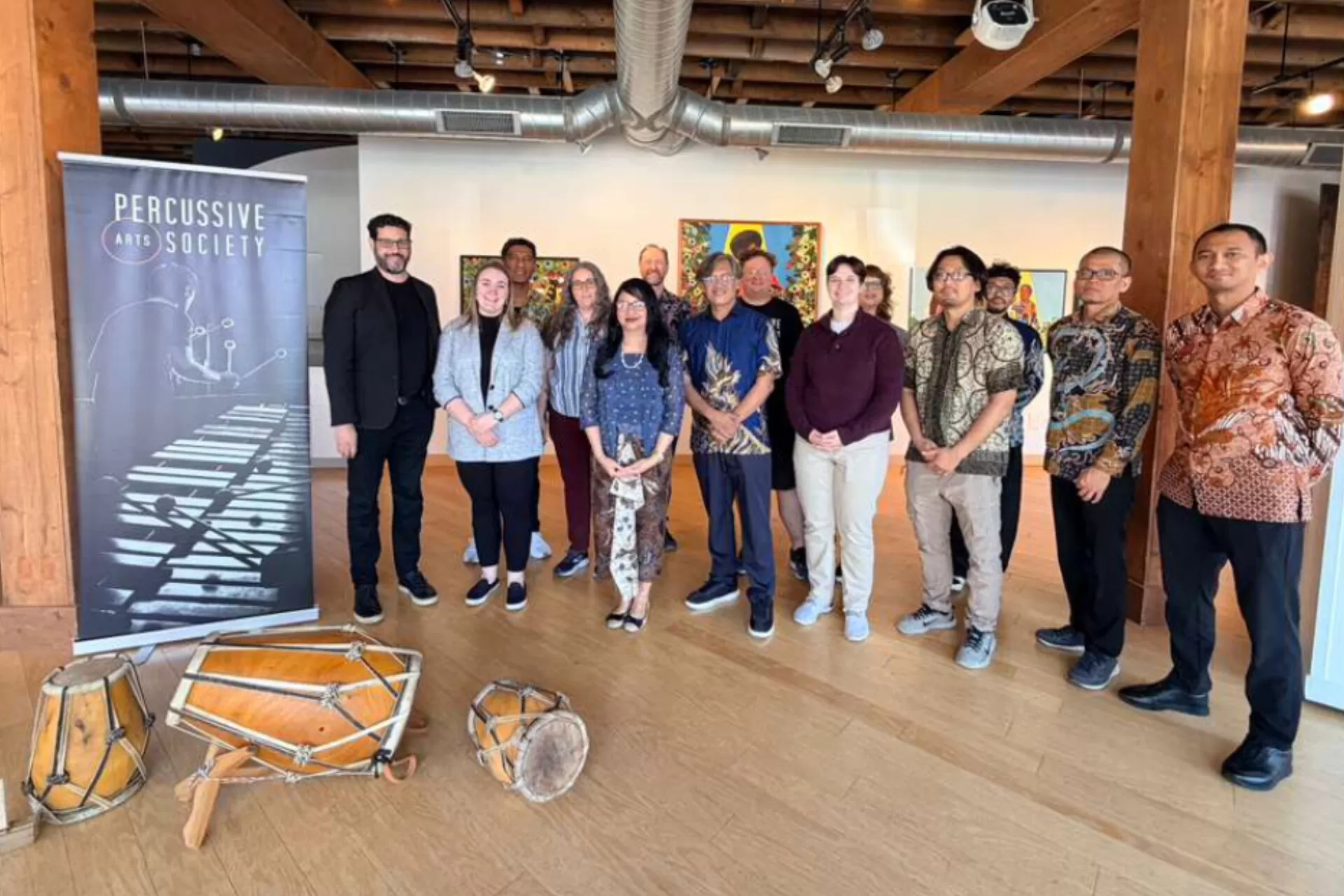
The arrival of these Sundanese percussions were enthusiastically received by the Percussive Arts Society. "We greatly appreciate the initiative of the PAS-Indonesian Chapter and the facilitation support from the Consulate General of the Republic of Indonesia in Chicago for donating the Sundanese drums, which will be the first traditional Indonesian musical instrument owned by the RDC. These Sundanese percussion instruments will not only be part of the museum's collection but will also serve as an educational tool to introduce Indonesia's rich culture to students, musicians, researchers, and the wider community," said Joshua Simonds, Executive Director of PAS in a press release distributed by the Indonesian Consulate General in Chicago.The museum is currently undergoing renovations and it will open soon.
Meanwhile, Indonesian Consul General in Chicago, Trisari Dyah Paramita, stated that the Sundanese Kendang, as part of Indonesia’s cultural heritage, will help strengthen ties between the people of Indonesia and the United States through music, education, and cultural exchange.
"As a percussion musician, I really want various types of traditional Indonesian percussion to be better known in America, not just to be played, but to be part of an education program to learn about Indonesian arts and culture. Hopefully, this initiative will open the door to the introduction of percussion instruments from Papua, Batak, Bali, and other ethnic groups," Bowie concluded.
Interview and written by Amanda Tamara
Sources : Bowie Djati / KJRI Chicago








Related Article
Firman Ichsan Brings His Photography to Carnegie Museum of Art in Pittsburgh